Contrary to popular belief, your CEO probably likes your CMO. A recent study found that 71% of CEOs would grade their CMO an “A” or “B” for their overall performance in the role. Relationships are stronger, and marketing leaders are increasingly seen as committed, collaborative, and aligned with the company's vision.
So why does marketing still feel like it's fighting for a seat at the table?
Put simply, being liked and being trusted with the growth strategy are two different things. The same study found that CEO confidence in marketing's ability to drive company growth has actually fallen, down to just 19% last year. The relationship is in good shape. The credibility, less so.
The Data Gap Nobody's Talking About
Picture a DTC brand heading into its Q3 budget review. The marketing team comes prepared: ROAS by channel, email open rates, paid social benchmarks. The CEO comes prepared too, with a question: marketing spend is up 30% and revenue is flat. Why?
The marketing team knows the answer involves rising acquisition costs, lack of clear attribution, and the lag between a first purchase and long-term LTV. The CEO hears: "we don't have a clear answer."
Katie Olssen, a Senior Merchant Growth Strategist at Daasity who works with marketing and executive teams, sees this dynamic regularly. "Marketers get too stuck in their lane and look too much at marketing metrics," she says. "They need to take a step back and focus on the metrics that higher-ups care about."
The issue isn't that the marketing data is wrong. It's being interpreted through a different lens than the one leadership uses to evaluate the business.
What CEOs Actually Want to See
CEOs mostly care about key business metrics like revenue, profitability, and ROI. Marketing has a problem when they don’t frame their data in those terms, or don’t have access to that data.
When leadership receives channel-level reports or so-called “vanity metrics” like click-through rates, their eyes glaze over because that doesn’t connect to anything on the P&L.
A Marketing Week survey of more than 1,600 brand-side marketers found that fewer than one in three regularly share effectiveness results with their CEO or chairman. When marketing doesn’t share relevant data regularly, trust suffers and marketing is less likely to be seen as a vital growth function.
What Should Marketing Teams Do?
The marketing teams that earn executive trust are the ones that can speak to the full picture. Not just how individual campaigns performed, but how marketing as a whole is contributing to revenue growth, customer profitability, and the bottom line.
That means having a consolidated view of every channel and initiative in one place, with the ability to drill down into details when a question comes up in the room. It also means tracking the metrics that connect marketing activity to business outcomes:
- Which channels are driving customers with strong long-term value
- Whether acquisition costs are moving in the right direction relative to the revenue those customers generate
- How overall marketing spend is translating into growth the whole company can see
When marketing can answer those questions quickly and confidently, the conversation with leadership shifts from justification to strategy.
Where Daasity Comes In
Daasity, the first and only analytics platform built specifically for consumer brands, was designed to close this gap. It pulls marketing data together from across your entire stack, including Shopify, Amazon, retail channels, and your ad platforms, and surfaces it in a single view that connects channel performance to business outcomes.
Instead of toggling between five tools and reconciling numbers that never quite match, marketing and leadership are finally looking at the same picture. For instance, here’s a peek at our Marketing dashboard:
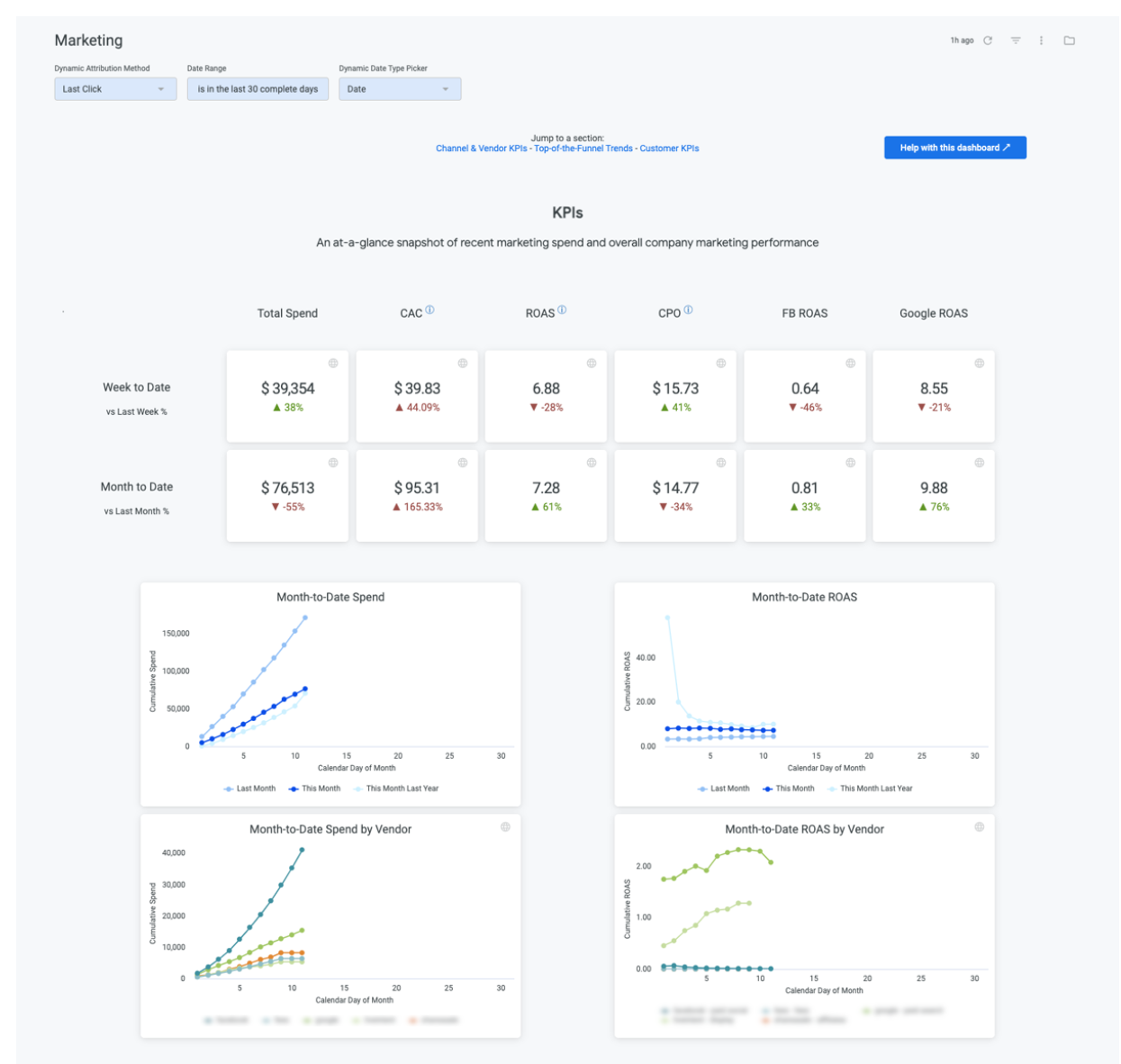
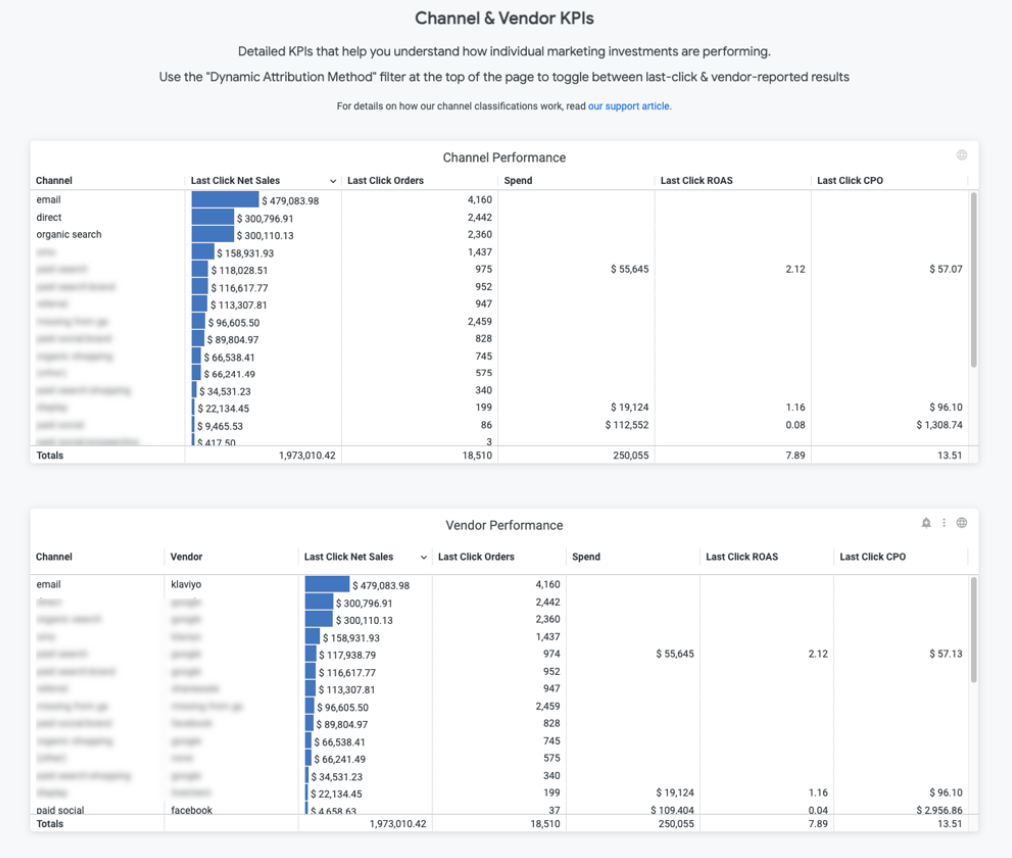
If you scroll down, you can analyze spend and ROAS across different ad platforms and vendors:
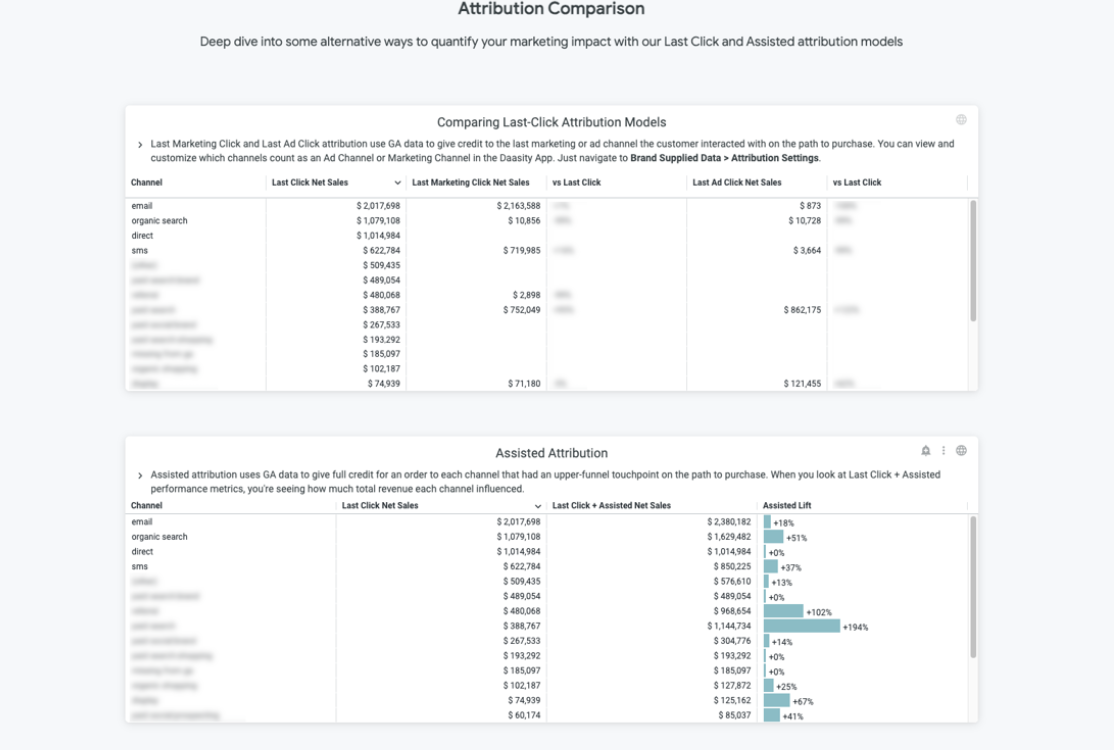
You can tap into various attribution models, including first touch and assisted attribution. So when your CEO asks why paid social looks great in Meta but doesn't seem to show up in revenue, you have a defensible, data-backed answer ready.
More importantly, the CEO isn't waiting until the end of the quarter to understand how marketing is performing. Because the data is consolidated and updated in real-time, teams can move away from manual copy-and-paste processes that make monthly or quarterly reporting such a drain. Automated reports can be scheduled and shared with leadership regularly, so visibility is always there, and the conversation can happen whenever it needs to.
The result is a growth engine you can see, explain, and defend in a boardroom.
How to Get Your CEO to Trust You
The same study we cited earlier found that 14% of CEOs have considered eliminating the CMO role entirely. That's a sobering number for teams that have spent years strengthening relationships with leadership. Goodwill matters, but it doesn't protect budget.
Trust is built on clarity, and clarity starts with measuring what the business actually cares about.
When a CEO can look at a single view of marketing performance and understand what the team is spending, what it's generating, and which channels are producing customers worth acquiring, the conversation changes. Marketing stops being a cost center under scrutiny and starts being a growth function to be taken seriously.
Want to see how other brands manage C-suite marketing conversations?
Learn how cookware brand Sardel moved from gut instinct to data-driven decisions, giving leadership daily visibility into marketing performance. Or read how beauty brand eos built an automated weekly report that goes straight to the leadership team every Monday morning, replacing the manual scramble with a single source of truth everyone trusts.