Site merchandising used to be straightforward: make your homepage look good, feature your hero products, and hope customers find what they need. But in 2026, that approach leaves serious money on the table. The brands winning today are designing beautiful sites and using behavioral data to understand exactly how customers shop, then optimizing every placement, collection, and product recommendation accordingly.
Here's a look at how leading DTC brands are leveraging new, data-driven site merchandising trends to drive measurable growth.
Site Merchandising Trends Shaping 2026
1. Data-Driven Insights Throughout the Customer Journey
Traditional analytics tell you how many people visited your site and which pages they saw. What they don't tell you is the story of how customers actually shop. Understanding key patterns reveals opportunities that summary data misses. That’s why leading brands are using real customer behavior data to inform design and copy decisions.
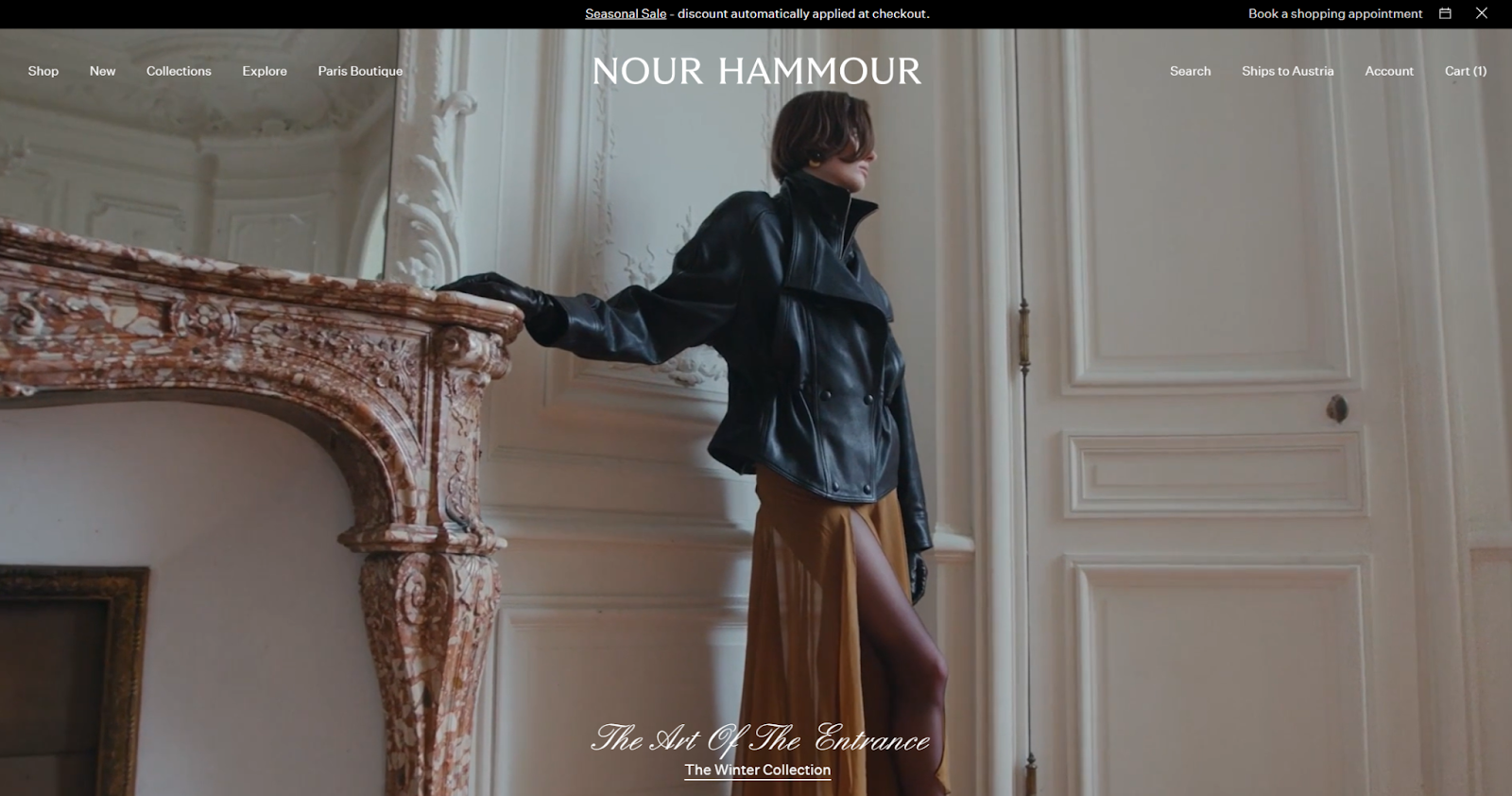
For instance, luxury brand Nour Hammour ran a site funnel analysis to identify specific drop-off points in their shopping journey. They realized customers were reaching product pages but hesitating before adding items to cart. By adding clear messaging about free returns, duties, and taxes at that critical moment, they improved their conversion rate.
2. Intelligent Cart Upsells Based on Behavior
Smart cart upsells have moved beyond generic recommendations. The brands seeing real lift are using journey data to make intelligent, contextual suggestions based on what customers showed interest in.
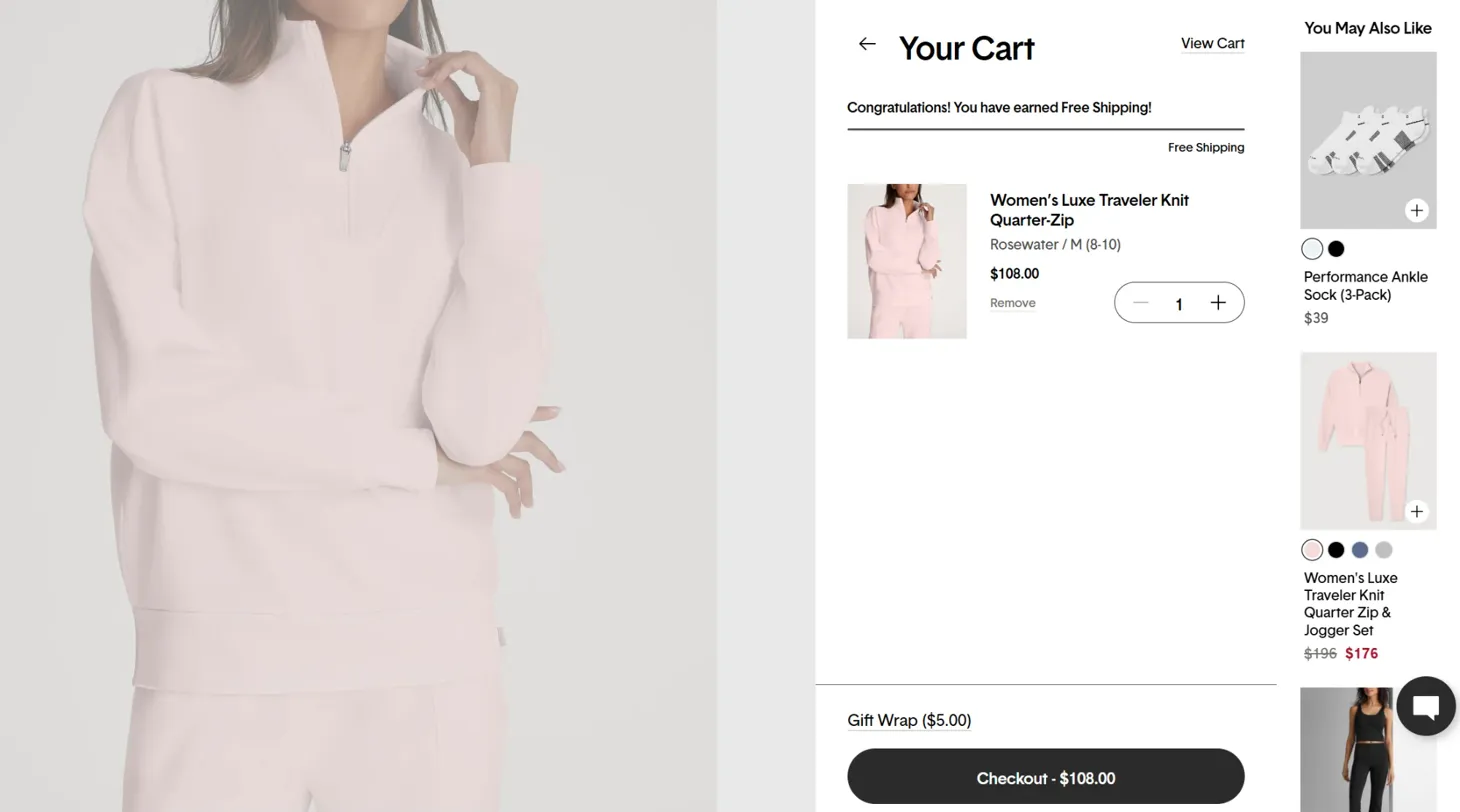
Take underwear brand Tommy John. You’ll notice that the recommendations in their "You May Also Like" section aren't static. They adapt based on the product page the customer has viewed, and what's in their cart. For instance, add women's loungewear, and you’ll see performance socks and matching jogger sets in coordinating colors:
3. Zero-Party Data Powers True Personalization
Personalization in 2026 goes deeper than showing different homepage banners to different customer segments. The most effective personalization comes from zero-party data: information customers willingly share about their preferences, needs, and attributes.
Brands are using zero-party data about individual attributes (body measurements, skin concerns, hair texture, style preferences) to personalize the entire site merchandising experience.
ThirdLove pioneered this approach in the intimates category with their “Fitting Room” feature. The quiz asks detailed questions about measurements and preferences:
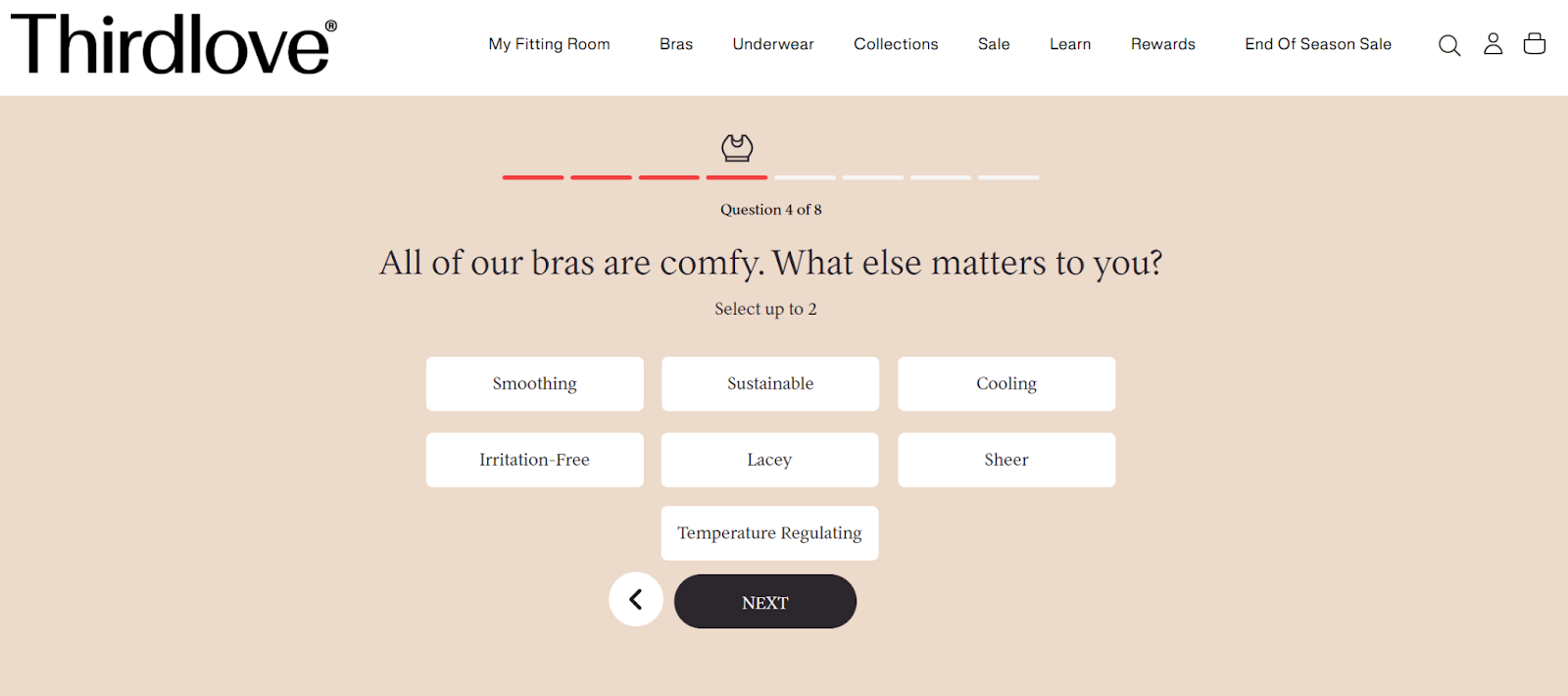
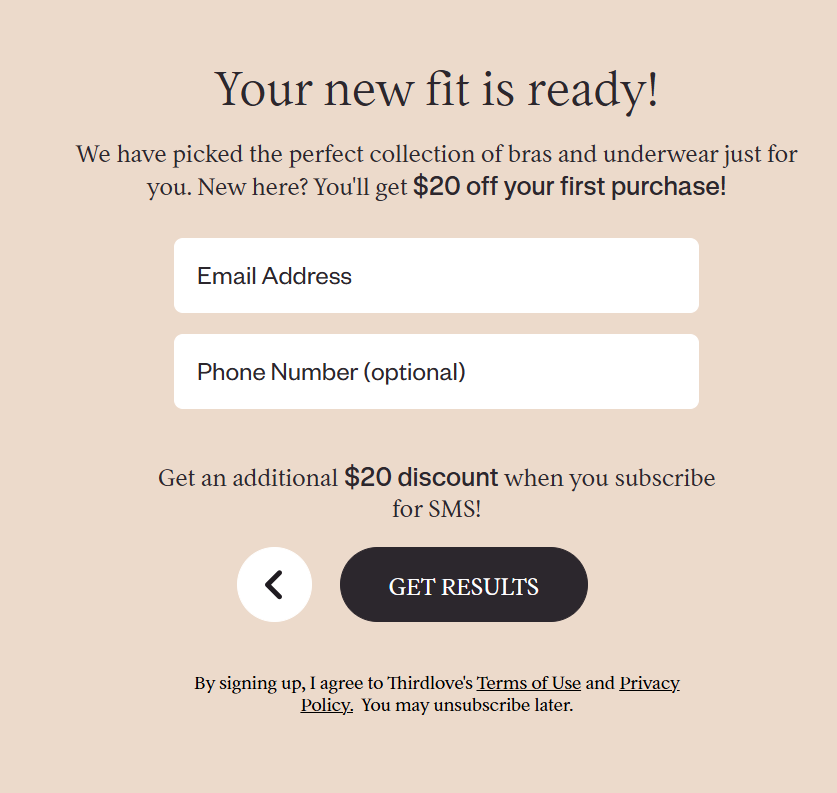
Once the quiz is complete, ThirdLove curates a personalized collection of products. This approach reduces decision fatigue and boosts conversions by showing customers exactly what they're interested in.
These merchandising trends share a common requirement: understanding how customers navigate and make decisions on your site. And that's where most brands hit a wall.
4. AI Agents Transform the Shopping Experience
Forward-thinking brands are offering AI-powered shopping assistants that guide customers through complex purchase decisions.
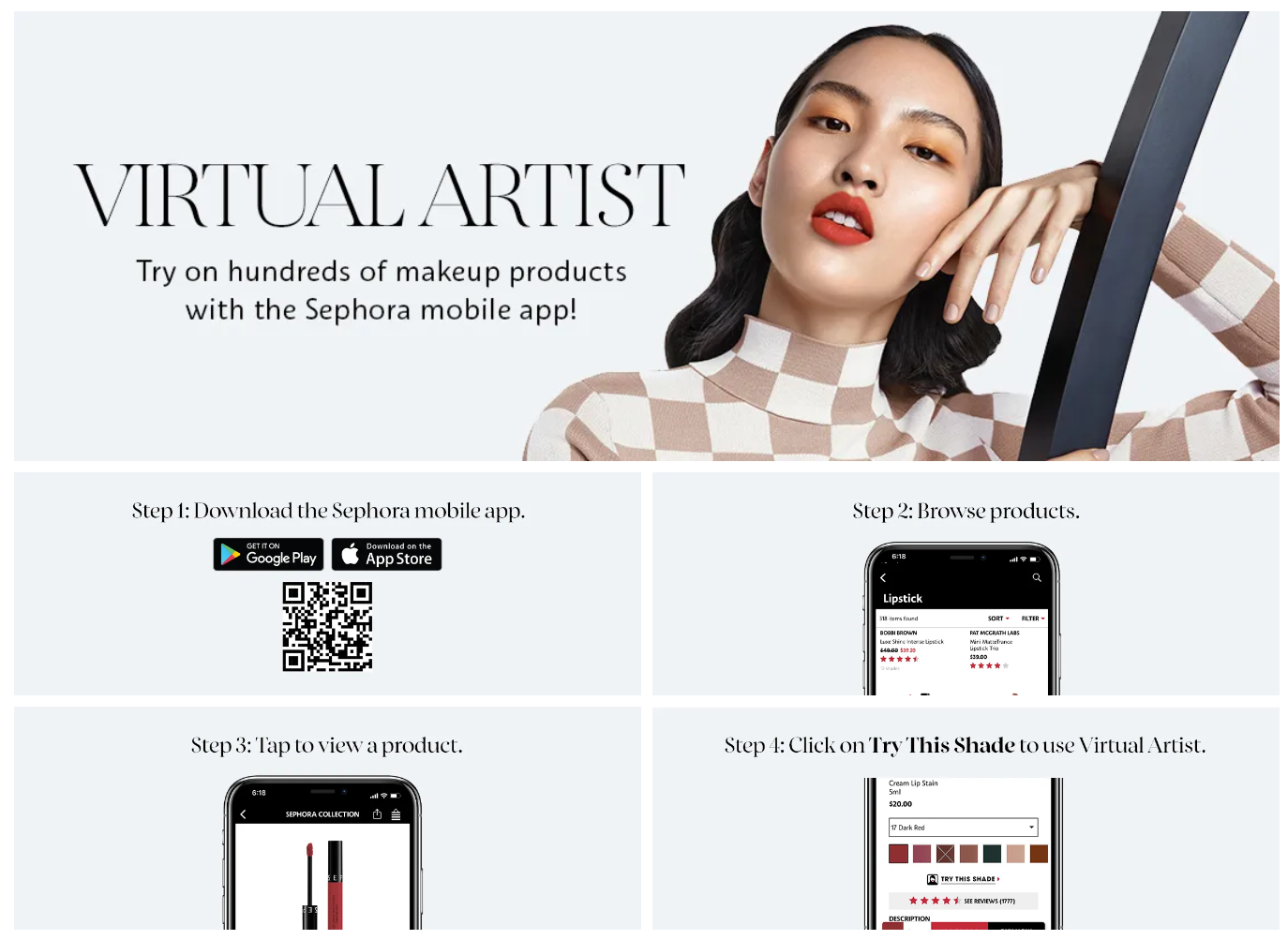
For instance, Sephora's Virtual Artist analyzes your skin tone to recommend precise foundation, concealer, and primer matches from brands like Fenty Beauty and NARS. It asks about your skin type, concerns like acne or dryness, and preferences, then builds a customized regimen using clinical-grade logic. The AI even remembers past answers and purchase history to refine future recommendations.
These merchandising trends share a common requirement: understanding how customers navigate and make decisions on your site. And that's where most brands hit a wall.
The Problem: Your Data Shows a Summary, Not The Full Customer Journey
Here at Daasity, we work with many D2C brands and one thing has become clear: site data is often too high-level. Without visibility into the full customer journey, you're making merchandising decisions based on incomplete information.
Google Analytics 4 shows you the summary statistics like sessions, pageviews, bounce rates, and conversion rates by channel. You can see that 10,000 people visited your site last week and 250 of them purchased. But by default, GA4 doesn't show you the story between those two numbers.
The gap between what GA4 shows and what you need to know is the difference between guessing and knowing what will drive revenue.
How Custom Funnel Analytics Close the Gap
Daasity’s custom development exports raw GA4 event data into BigQuery and transforms it into usable funnel analytics. This solution is already live and being used by brands like Frame, Tommy John, and Natural Life to:
- Track the full customer journey and understand how customers discover products and navigate through collections, product pages, and search
- Identify highest-converting landing pages based on revenue generated, not vanity metrics like sessions or pageviews
- Make smarter product placement decisions and determine where changes can unlock significant revenue
We start with a GA4 event audit to ensure your data fires correctly across pageviews, product views, and collection interactions. From there, we build custom queries specifically for your store that turn raw events into actionable merchandising insights.
Get a Free a Site Merchandising Audit
Leveraging these merchandising trends requires the right data foundation, and we’d love to help you get there. At a minimum, you need accurate event tracking and the ability to turn that data into actionable insights throughout the funnel.
Ready to get started? Drop your email here, and we will get in touch to set up your free audit.