

Shelf space in retail is limited. Every slot your product occupies is one a competitor doesn't get. And when a buyer decides to expand your distribution or cut you from the assortment, they're not making that decision based on how much they like your brand. They're asking a straightforward question: will this product grow my category?
The brands that can answer that question with data tend to scale distribution faster. The brands that can't often find themselves stuck, wondering why strong sales aren't translating into more doors.
Here's how to build the data story that earns shelf space.
The Two Essential CPG Metrics
There are many important CPG metrics, but there are two in particular that you need to pay attention to. At the highest level, retail growth comes down to two levers: distribution and velocity. Distribution is how many stores carry your product. Velocity is how much you sell per store per week.
Sales = Distribution × Velocity
These levers work together. Strong velocity in your current stores gives you the credibility to ask for more distribution. And more distribution, assuming velocity holds, multiplies your total sales. The brands that scale successfully understand this relationship and build strategies around both.
But here's where many brands get stuck: velocity numbers alone don't tell the whole story. A buyer doesn't just want to know that you're selling well. They want to know that you're selling better than the alternatives. And that requires context.
Why Category and Competitive Data Matters
Syndicated data from providers like Circana, NielsenIQ, or SPINS gives you the market-wide view you need to tell a credible story. Without benchmarks, even strong numbers can fall flat.
Walking into a buyer meeting and saying "We grew 30% last year" sounds impressive, but it's not the whole picture. If your category grew 40% last year, your 30% growth actually means you're losing ground. If a competitor in your segment grew 60%, your growth looks even less compelling.
Syndicated data provides the additional context to answer the questions buyers care about, such as:
- Are you outperforming the category? If the frozen pizza category grew 8% and your brand grew 15%, that's worth highlighting.
- Are you bringing in new shoppers? Retailers care about incrementality. If your product is pulling sales from other items they already carry, that's neutral for them. But if you're attracting new customers to the category or increasing basket size, you're adding value they can't get elsewhere.
- How does your velocity compare to competitors with similar distribution? If you're outselling a competitor on a per-store basis, that's evidence you could do more with additional shelf space. This kind of comparison gives buyers a reason to reconsider their current assortment.
With this context, you're presenting a growth opportunity backed by evidence.
How Caulipower Tells Their Data Story
Caulipower has built a strong position in the $6 billion frozen pizza market with their better-for-you cauliflower crust pizzas. They've expanded across major retailers including Whole Foods, Walmart, Kroger, and Target. But getting there required more than a great product. It required a data story that resonated with buyers.
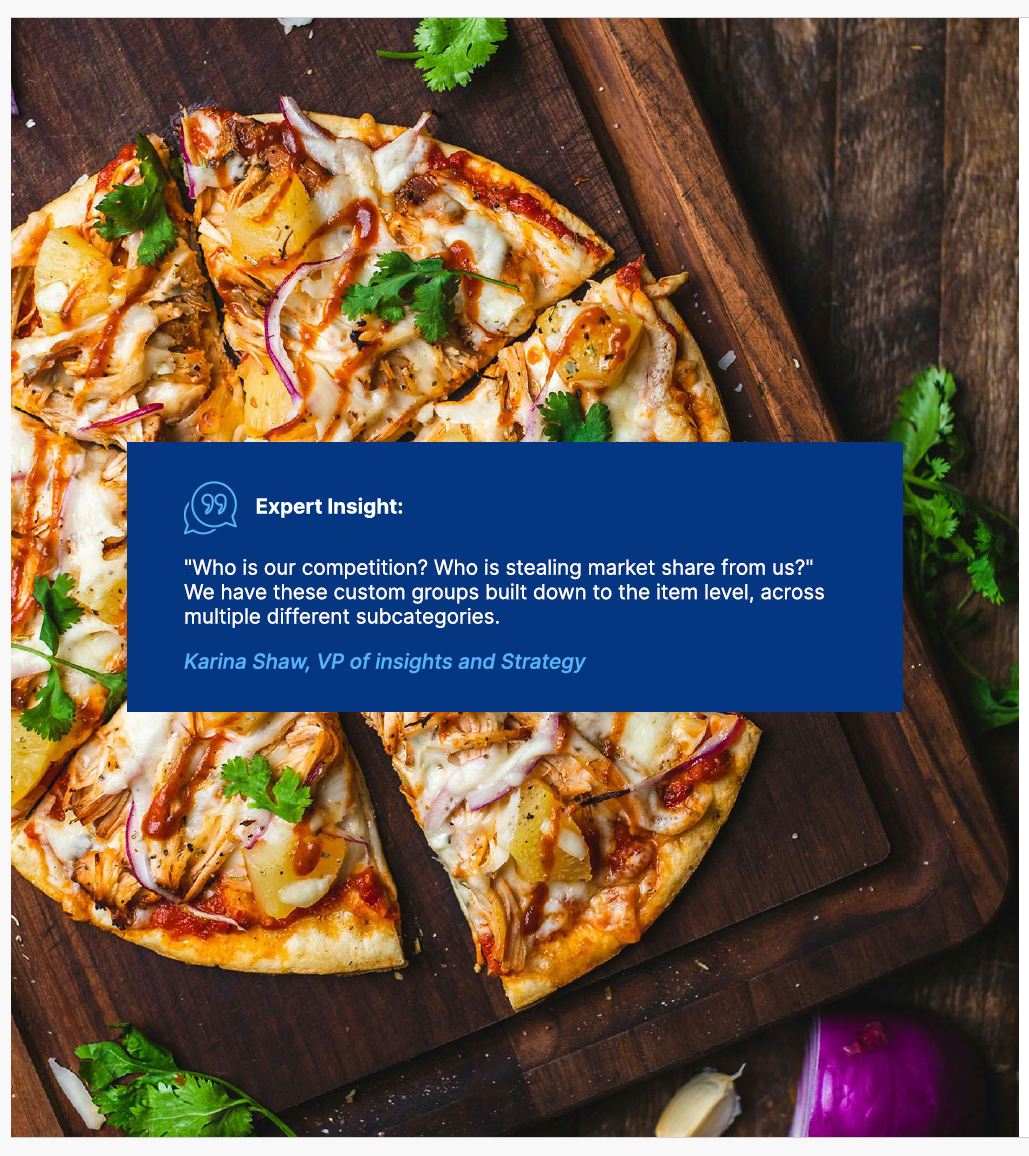
The company uses SPINS data for retail analytics across their channels, giving them visibility into category trends, competitive performance, and market share. This allows them to answer the questions buyers care about: How is the better-for-you crust segment growing compared to traditional frozen pizza? Where is Caulipower gaining or losing share? Which competitors are trending up or down?
This level of detail changes the conversation with retailers. Instead of simply presenting their own sales numbers, Caulipower can show how their product fits into broader category dynamics. They can identify segment opportunities, benchmark their velocity against competitors, and make a data-backed case for why expanded distribution will benefit the retailer.
The challenge many brands face is that this kind of analysis requires pulling together data from multiple sources: retailer POS systems, syndicated providers, internal sales reports. Caulipower addressed this by implementing Daasity as their centralized analytics platform, unifying their retail data into a single source of truth and saving time.
Build Your Retail Data Story
Understanding how to leverage retail analytics is what separates brands that plateau from brands that scale. The metrics you track, the benchmarks you use, and the way you frame your story to buyers all contribute to whether you win or lose distribution.
The Daasity Retail Analytics Handbook breaks down the fundamentals: how to measure velocity and distribution, where to get category and competitive data, and how to turn those numbers into a compelling narrative for retail partners. Whether you're preparing for a line review or building a long-term distribution strategy, it's a practical guide to winning shelf space with data.


